
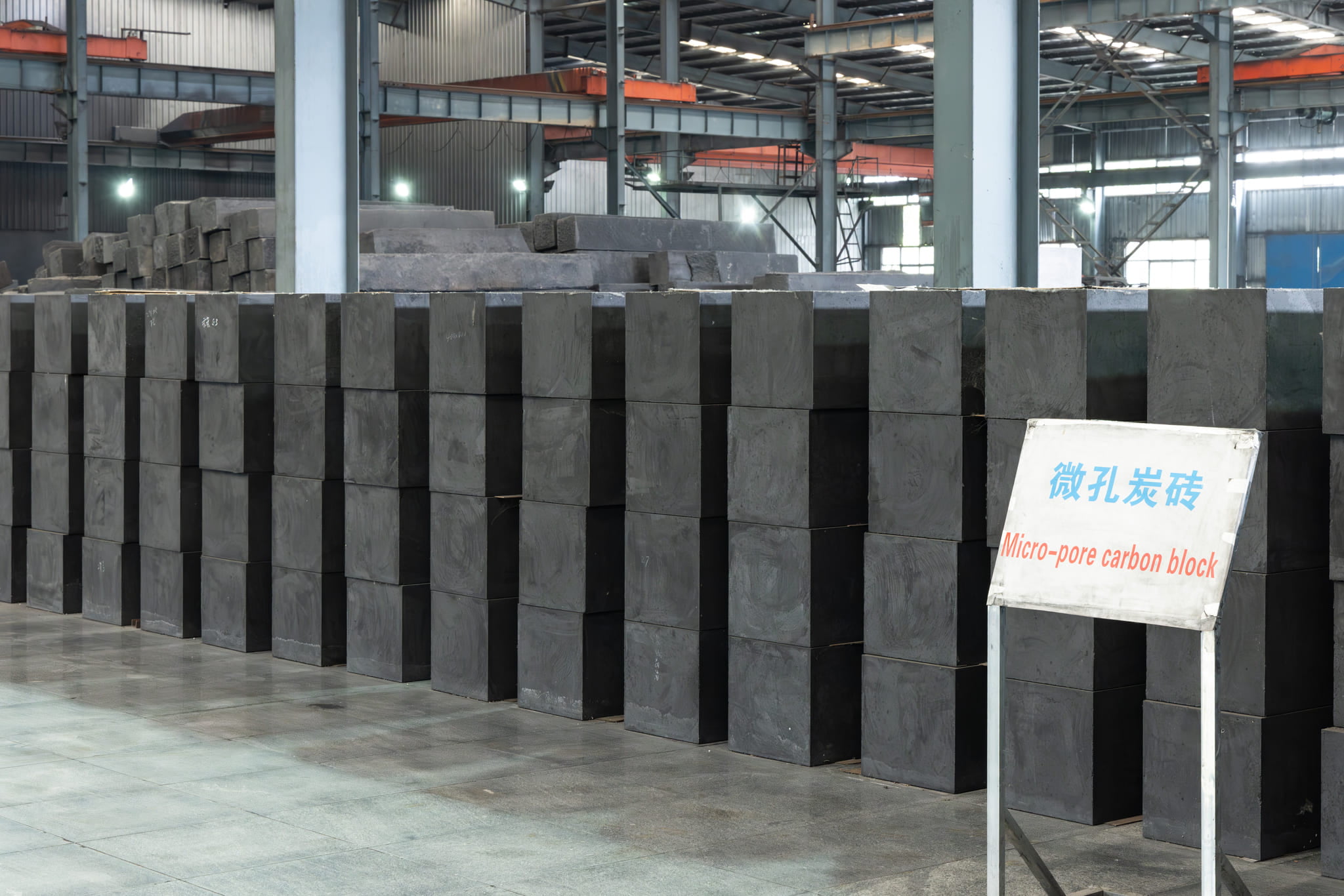
What Does a Carbon Block Look Like? Color, Texture, and Structure Explained
Struggling to evaluate the quality of a carbon block for your industrial furnace? It's a high-stakes decision, and you might be tempted to look for simple visual cues—like color or texture—to tell a good block from a bad one. This approach, however, can lead to disastrous purchasing mistakes, resulting in premature furnace wear, costly downtime, and significant safety risks1. The solution lies in understanding what a block's appearance doesn't tell you and shifting your focus to verifiable performance data.
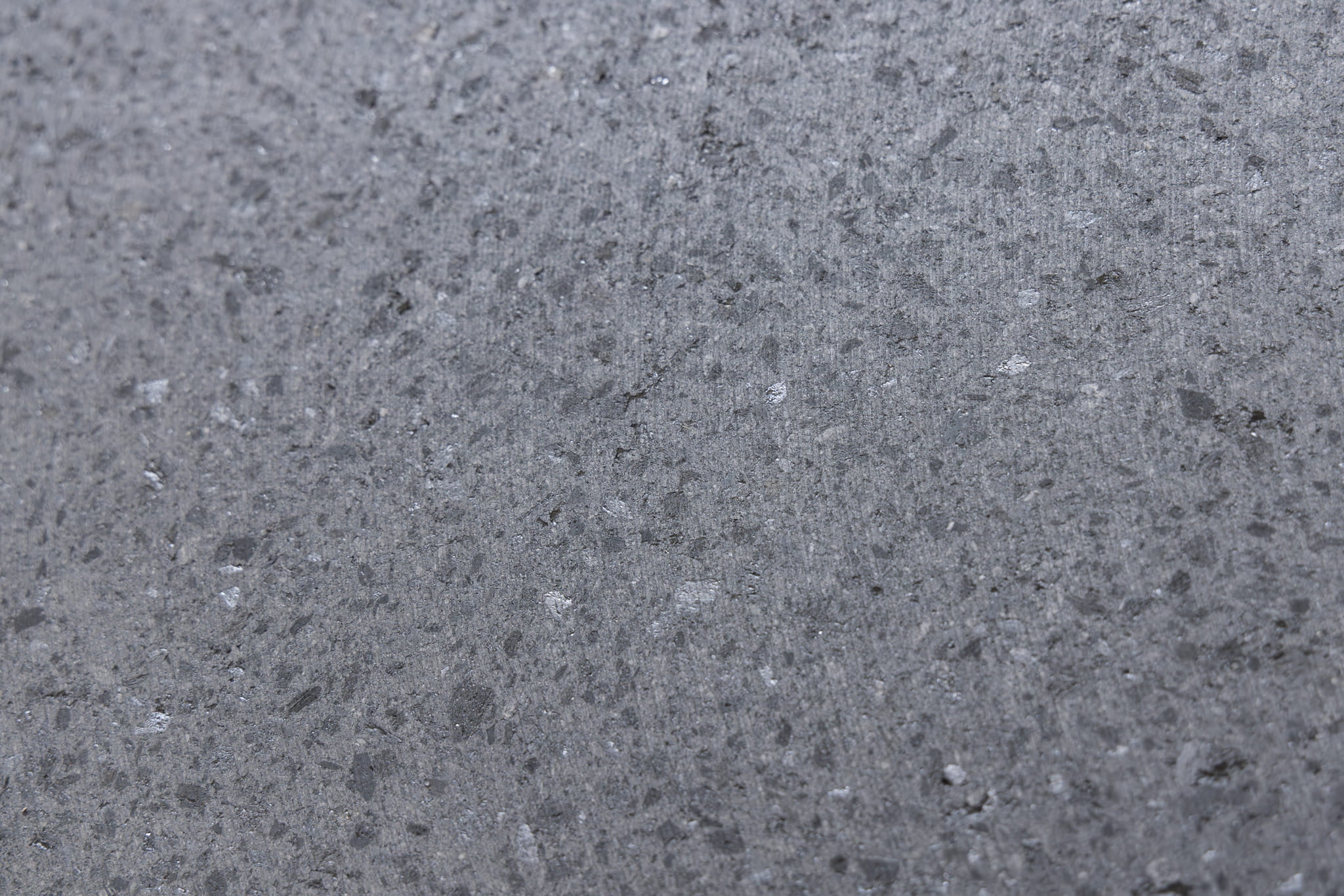
A carbon block is typically a dense, dark gray to black brick with a texture that can range from coarse and granular to smooth and fine-grained. However, these visual characteristics are byproducts of the specific raw materials and manufacturing processes used. They are not reliable indicators of critical performance metrics like thermal conductivity, alkali resistance, or compressive strength2, and should not be used to judge a block's quality or suitability for a specific furnace application.
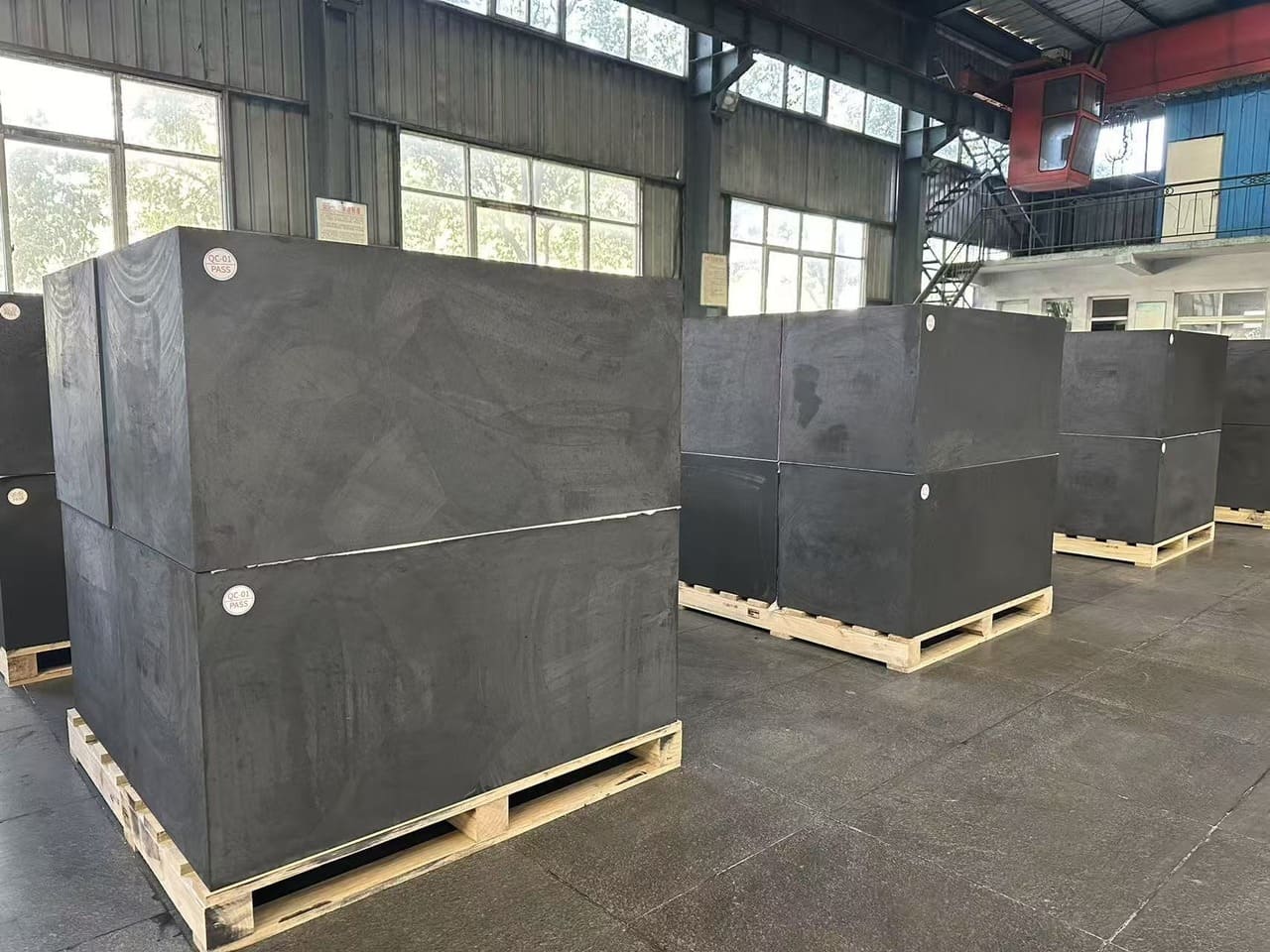
Now that we’ve established that looks can be deceiving, you might be wondering why that is. Let's dive deeper into why the common-sense approach of visual inspection fails for these critical components and explore the far more important questions you should be asking your supplier.
Why Can't You Judge a Carbon Block by Its Color?
Imagine two carbon blocks side-by-side. One is a deep, uniform black, while the other is a mottled, lighter gray. It's natural to assume the darker one is somehow "better" or more pure. But making procurement decisions based on this assumption is a frequent and costly error.
A carbon block's color is primarily determined by its raw material composition (like calcined anthracite, coke, and graphite3) and the final heat treatment temperature it undergoes. It does not directly correlate with the performance properties that actually determine the lifespan and efficiency of your furnace lining.
Dive Deeper: From Raw Materials to Final Color
The final shade of a carbon block is a result of a complex and highly controlled manufacturing process. Two main factors are at play:
H3: The Influence of Raw Materials The primary ingredients in most carbon blocks are carbonaceous aggregates and binders. The type and quality of these raw materials create a baseline for the final appearance.
- Calcined Anthracite and Coke: These are the workhorse materials. Their inherent color, which can vary from dark gray to black depending on their source and calcination process, sets the block's foundational color.
- Graphite: When artificial or natural graphite is added to the mix, it can impart a slightly more metallic sheen or a deeper black color. This is common in graphitic or semi-graphitic blocks designed for higher thermal conductivity.
A frequent question we get from procurement managers is about color consistency between batches. I once had a client who was concerned because a new shipment of semi-graphitic blocks was a slightly different shade of gray than the previous one. We had to walk them through the technical data sheets for both batches. The data clearly showed that all critical performance specs—porosity, density, and strength—were identical and well within the required tolerance. The minor color variation was simply due to an approved, slight variance in the raw coke source, which had no impact on performance.
H3: The Role of Heat Treatment and Graphitization After being formed, the "green" blocks are baked at extremely high temperatures (over 1000°C)4 to carbonize the binder and create a solid, monolithic block. For graphitic and semi-graphitic blocks, they may undergo a further graphitization step at even higher temperatures (up to 3000°C). This process transforms the amorphous carbon into a more crystalline, graphite-like structure.
This heat treatment significantly affects color. Higher temperatures generally lead to a more ordered structure, which can influence the way the block reflects light, often making it appear darker or giving it a subtle sheen. However, the goal of graphitization isn't to achieve a certain color; it's to achieve specific properties, primarily higher thermal conductivity.
Here’s a simple breakdown of what visuals do and don't indicate:
| Visual Cue | What it Actually Indicates | What it Doesn't Indicate |
|---|---|---|
| Color (Gray to Black) | The blend of raw materials used and the final baking temperature. | Overall "quality," strength, or alkali resistance. |
| Sheen (Dull to Metallic) | The degree of graphitization, which correlates to thermal conductivity. | Suitability for an application requiring low thermal conductivity. |
| Color Uniformity | Consistency of the raw material mix and baking process within a single block. | The block's ability to resist chemical attack. |
Relying on color is a gamble. A block that looks "right" might have the completely wrong thermal properties for your application, leading to either massive energy waste or dangerous overheating of the furnace shell.
Does Texture Reveal Anything About a Carbon Block's Strength?
Running your hand over the surface of a carbon block, you might feel a coarse, gritty surface or a smooth, fine-grained one. Your instinct might tell you that the finer, denser-feeling block is stronger and more durable. This is another misleading shortcut that can lead to selecting the wrong material for your furnace.
The texture of a carbon block is dictated by the grain size distribution of the aggregates used in its manufacture. While it provides clues about the block's internal structure and porosity, a "smoother" or "coarser" feel does not automatically mean it is stronger, weaker, or better suited for your needs.
Dive Deeper: Particle Size, Porosity, and Performance
The texture you feel is a direct result of the particle size distribution (PSD) of the carbon aggregates. As manufacturers, we don't choose particle sizes based on how they will make the block feel. We engineer the PSD to achieve specific, critical performance properties.
H3: Engineered Particle Mixes A carbon block is not made from a single-sized powder. It's a carefully designed composite of various particle sizes, from large grains down to super-fine powders.
- Large Grains (Coarse Texture): These form the structural backbone of the block. A block with a higher proportion of larger aggregates will naturally feel coarser. In some applications, these larger grains can help improve thermal shock resistance.
- Fine Powders (Smooth Texture): These fines fill the gaps between the larger grains. Using more fines can create a denser block with lower overall porosity, which will feel smoother to the touch. This is especially important for certain types of blocks.
Think of it like making concrete. You need a mix of large gravel, smaller sand, and fine cement powder. Just using gravel would leave too many voids, and just using cement would be weak and brittle. The combination creates strength and density. The same principle applies to a high-performance carbon block.
H3: The Case of Microporous Carbon Blocks A perfect example of texture being a byproduct, not a goal, is the microporous carbon block. These blocks are specifically designed for the most aggressive zones of a blast furnace, where penetration by alkali vapors is a primary cause of failure.
To combat this, we engineer the block to have extremely small pores (typically less than 1 micron). This is achieved by using a specific blend of very fine raw materials and special additives. The resulting block often feels much smoother and denser than a standard carbon block.
But its value isn't in its smooth texture. Its value is in its low permeability. The tiny pores make it incredibly difficult for alkali vapors to penetrate and destroy the carbon matrix from within. A procurement manager who chooses a standard block just because it "feels" similarly dense would be making a catastrophic mistake, as it would lack the specialized pore structure needed to survive in that environment. The furnace lining would fail prematurely, leading to millions in lost production.
The right texture is always application-dependent.
- Coarse Texture: Often found in standard semi-graphitic blocks. May be perfectly suitable for lower sections of a furnace hearth where mechanical load is the primary concern.
- Fine Texture: Typical of microporous or ultra-microporous blocks. Essential for upper stack and bosh areas where chemical resistance to alkali vapor is paramount.
Don't let your hands fool you. The tactile feel of a carbon block is secondary to the performance data that proves it can withstand the specific threats inside your furnace.
What Are the Better Questions to Ask About a Carbon Block?
By now, it should be clear that judging a carbon block by its color or texture is like judging a book by its cover—a flawed strategy for a high-stakes decision. So how do you move forward and make a confident choice that protects your investment? You feel stuck, needing a better framework.
Instead of asking what a carbon block looks like, you must shift your focus to questions about quantifiable performance data that directly relate to your furnace's unique operating conditions. Smart questions lead to safe, reliable, and cost-effective procurement.
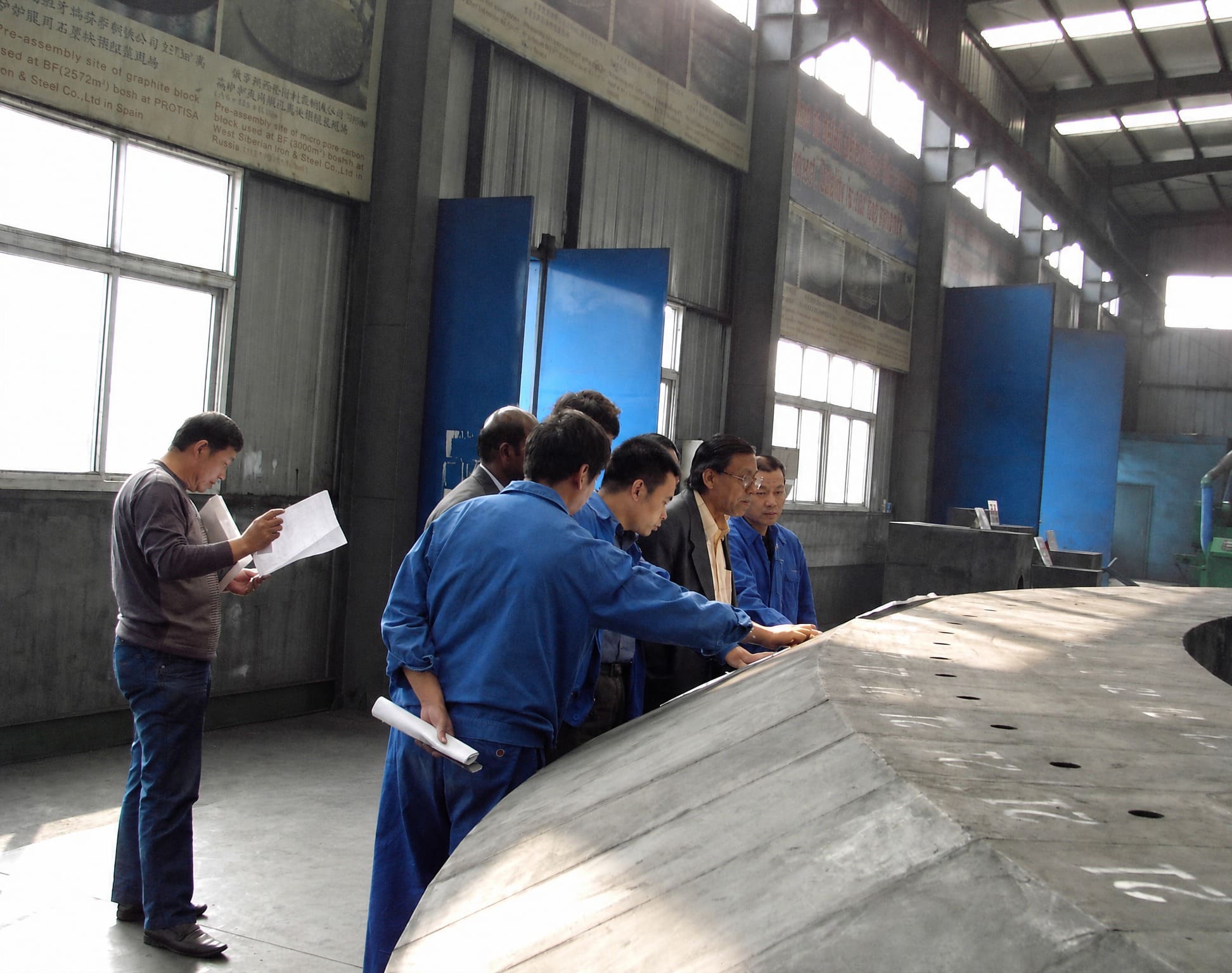
Dive Deeper: Your Checklist for Supplier Evaluation
In my experience helping clients specify materials for furnace relines, the most successful projects begin with the right questions. Here are the questions you should be asking your potential suppliers. Treat this as a mandatory checklist.
H3: Question 1: What are the Apparent Porosity and Gas Permeability?
- Why it matters: This is arguably the most critical parameter. Porosity refers to the volume of open pores within the block, while permeability measures how easily liquids or gases can pass through those pores. High permeability is a direct pathway for corrosive agents—like molten iron and alkali vapors—to penetrate and degrade the block from the inside out.
- Ask for: The specific percentage of apparent porosity and the gas permeability value in units like Nano-Perm (nPM) or Centi-Darcy (cD).
- Application example: For a blast furnace hearth and bottom, you need exceptionally low permeability to prevent liquid iron from penetrating the lining. Iron infiltration can lead to the formation of a "salamander," a large mass of solidified iron that is nearly impossible to remove and can cause catastrophic failure of the hearth shell.
H3: Question 2: What is the Thermal Conductivity Profile?
- Why it matters: This property dictates how heat moves through your furnace lining. The goal is a delicate balance. You need to keep heat inside the furnace for thermal efficiency, but you also need to allow enough heat to escape to maintain a safe operating temperature on the outer shell.
- Ask for: The thermal conductivity value (usually in W/m·K)5 at various operating temperatures.
- Application example: A semi-graphitic carbon block has lower thermal conductivity than a fully graphitic one. Using a high-conductivity graphitic block in an area designed for a semi-graphitic block can lead to excessive heat loss and dramatically increased energy costs. Conversely, using a low-conductivity block where a high-conductivity one is needed can trap too much heat, potentially compromising the integrity of the steel shell.
H3: Question 3: Can You Provide Alkali Resistance Test Data?
- Why it matters: In blast furnaces, alkali vapors (potassium and sodium) are a primary cause of refractory failure. They react with the carbon and any silica-containing components, causing the block to swell, crack, and lose strength.
- Ask for: Certified lab results from a standardized test, such as the RDI (Reduction-Degradation Index) or a potassium vapor cup test (JIS R 2209).
- Application example: This is non-negotiable for any carbon block intended for the bosh, belly, or stack of a blast furnace. A supplier's claim of "good alkali resistance" is meaningless without supporting test data that you can have your own technical team verify.
H3: Question 4: What Quality Management System and Batch Controls Are in Place?
- Why it matters: Consistency is everything. A single bad batch of blocks mixed into a furnace lining can create a weak spot that compromises the entire multi-million dollar installation. You need assurance that the block you specified is the block you receive, every single time.
- Ask for: Proof of quality management certification (like ISO 9001) and ask to see the batch-specific test report for the materials you are purchasing.
- My experience: As an ISO 9001 certified manufacturer, we at Yaxin Carbon live by these controls. Every batch has a unique identifier and comes with a certificate of analysis detailing its measured properties. A reputable supplier will have no hesitation in providing this documentation. If a supplier is evasive, consider it a major red flag.
Frequently Asked Questions
What is a semi-graphitic carbon block used for?
A semi-graphitic carbon block is a versatile refractory material used extensively in furnace hearths and bottoms. It offers a balanced profile of moderate thermal conductivity, good resistance to thermal shock, and excellent resistance to molten metal corrosion, making it a reliable and cost-effective choice for many blast furnace designs.
Is a darker carbon block more pure?
Not necessarily. Color is mainly influenced by the type of raw materials (anthracite vs. graphite) and the heat treatment temperature, not directly by purity. Purity, in the context of a carbon block, is primarily determined by its ash content6. This is a critical specification found on the technical data sheet and should be verified there.
How can I verify the quality of a carbon block on-site?
On-site visual inspection is unreliable for judging performance. Your main on-site task should be to check for physical defects from shipping, such as large cracks or chipped corners. The true quality verification comes from matching the batch numbers on the blocks to the supplier's Certificate of Analysis and confirming that the data (density, porosity, strength, etc.) meets your purchase specifications.
Why is a microporous carbon block more expensive?
A microporous carbon block is more expensive due to its complex and specialized manufacturing process. It requires very fine, high-purity raw materials and proprietary additives to create an internal structure with extremely small pores. This structure provides superior resistance to alkali vapor infiltration, which significantly extends furnace campaign life and justifies the higher initial investment.
Conclusion
To wrap things up, the appearance of a carbon block—its specific shade of gray, its surface texture, and its visible grain structure—is a poor and misleading substitute for rigorous technical evaluation. I've seen firsthand how judging a block by its looks can lead to premature wear, unplanned shutdowns, and significant financial losses. To ensure the longevity, safety, and efficiency of your industrial furnace, your procurement focus must shift from a simple visual inspection to a disciplined review of performance data. The right carbon block isn't the one that looks best; it's the one whose documented properties precisely match the demanding chemical and thermal environment inside your furnace.
If you're ready to move beyond guesswork and select the right refractory materials based on verifiable data, contact our technical team at Yaxin Carbon. We can help you evaluate your furnace requirements and match them with the optimal long-life lining solution for your operation.
"(PDF) Refractory Performance and Mechanism of Damage", https://www.academia.edu/65446554/Refractory_Performance_and_Mechanism_of_Damage. A study on refractory material failures in industrial furnaces highlights how improper selection, often based on visual inspection, can lead to operational inefficiencies and safety hazards. Evidence role: case_reference; source type: research. Supports: The risks associated with improper selection of refractory materials for industrial furnaces.. Scope note: The study may focus on specific types of furnaces or industries, limiting general applicability. ↩
"Evaluation of some carbon block for blast furnace bottom ...", https://www.osti.gov/etdeweb/biblio/5427202. Research on refractory materials demonstrates that visual traits like color and texture are not reliable indicators of properties such as thermal conductivity or alkali resistance. Evidence role: mechanism; source type: research. Supports: The lack of correlation between visual traits and performance metrics in carbon blocks.. Scope note: The findings may depend on specific manufacturing processes or material compositions. ↩
"Calcined Anthracite Coal Materials", https://www.asbury.com/materials/coke-coal-based-carbons/calcined-anthracite-coal/. Educational resources on refractory materials explain how raw material composition affects the physical appearance of carbon blocks. Evidence role: mechanism; source type: education. Supports: The influence of raw materials like calcined anthracite, coke, and graphite on the color of carbon blocks.. Scope note: The explanation may not account for variations in manufacturing processes. ↩
"Refractory", https://en.wikipedia.org/wiki/Refractory. Educational materials on refractory manufacturing detail how high-temperature baking carbonizes binders and solidifies the structure of carbon blocks. Evidence role: mechanism; source type: education. Supports: The role of high-temperature baking in the production of carbon blocks.. Scope note: The description may not include variations in temperature ranges for different types of carbon blocks. ↩
"The Measurement of Thermal Conductivity of Refractory ...", https://www.osti.gov/biblio/4388350. Educational resources on thermal properties explain how W/m·K values are used to assess the performance of refractory materials. Evidence role: statistic; source type: education. Supports: The importance of thermal conductivity values in evaluating carbon block suitability.. Scope note: The explanation may not address variations in thermal conductivity across different temperature ranges. ↩
"D2866 Standard Test Method for Total Ash Content of ...", https://store.astm.org/d2866-11r18.html. Educational resources on refractory materials explain how ash content is used as a metric for purity. Evidence role: statistic; source type: education. Supports: The role of ash content in determining the purity of carbon blocks.. Scope note: The explanation may not address variations in ash content across different types of carbon blocks. ↩