
Carbon Ramming Paste and Carbon Blocks: How Do They Really Work Together?
Selecting materials for your furnace lining is a high-stakes decision. You might think choosing top-tier carbon blocks is enough, but a hidden danger lies in the gaps between them. A small mismatch between your carbon ramming paste and carbon blocks can undermine the entire system, leading to premature failure and costly downtime. True operational security comes from treating these two components as a single, integrated system.
Carbon ramming paste and carbon blocks work together by forming a single, monolithic structure. The paste is not just a filler; it is a functional material that sinters during furnace heat-up to create a seamless, gas-tight joint1. This integrated lining compensates for differences in thermal expansion, prevents liquid metal penetration2, and ensures uniform heat distribution across the entire furnace hearth.
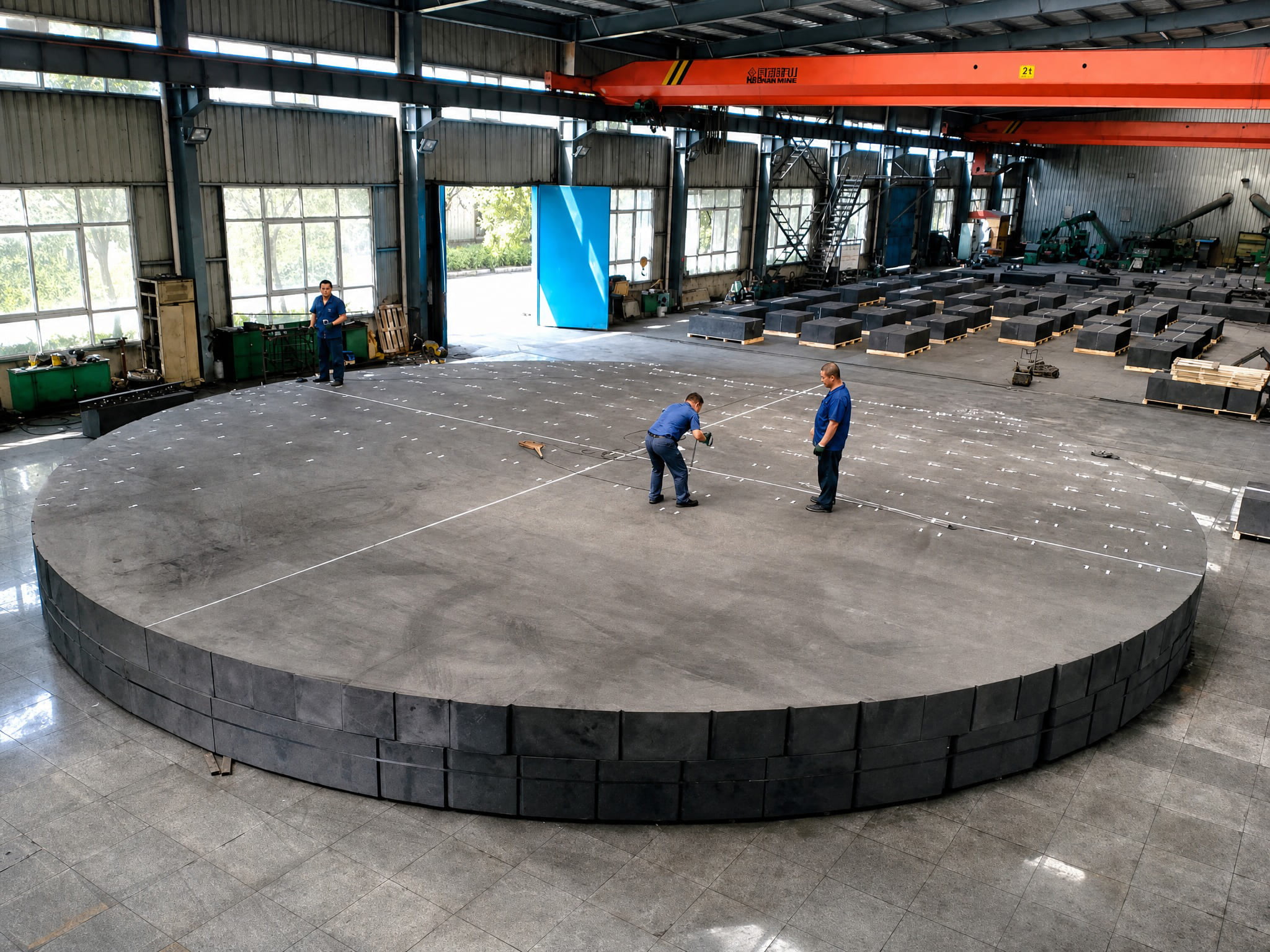
Understanding this synergy is the first step. Now, let's explore why treating these materials as separate purchases is one of the biggest risks in furnace procurement and how you can evaluate them as the single system they are designed to be.
Why Is a Mismatch More Dangerous Than Low Quality?
It's natural to focus on the certified quality of the carbon blocks, as they form the bulk of the lining. But what if I told you that even the highest-grade blocks can fail catastrophically because of the wrong paste? From my experience in after-sales support, a mismatch is often the root cause of premature lining failure.
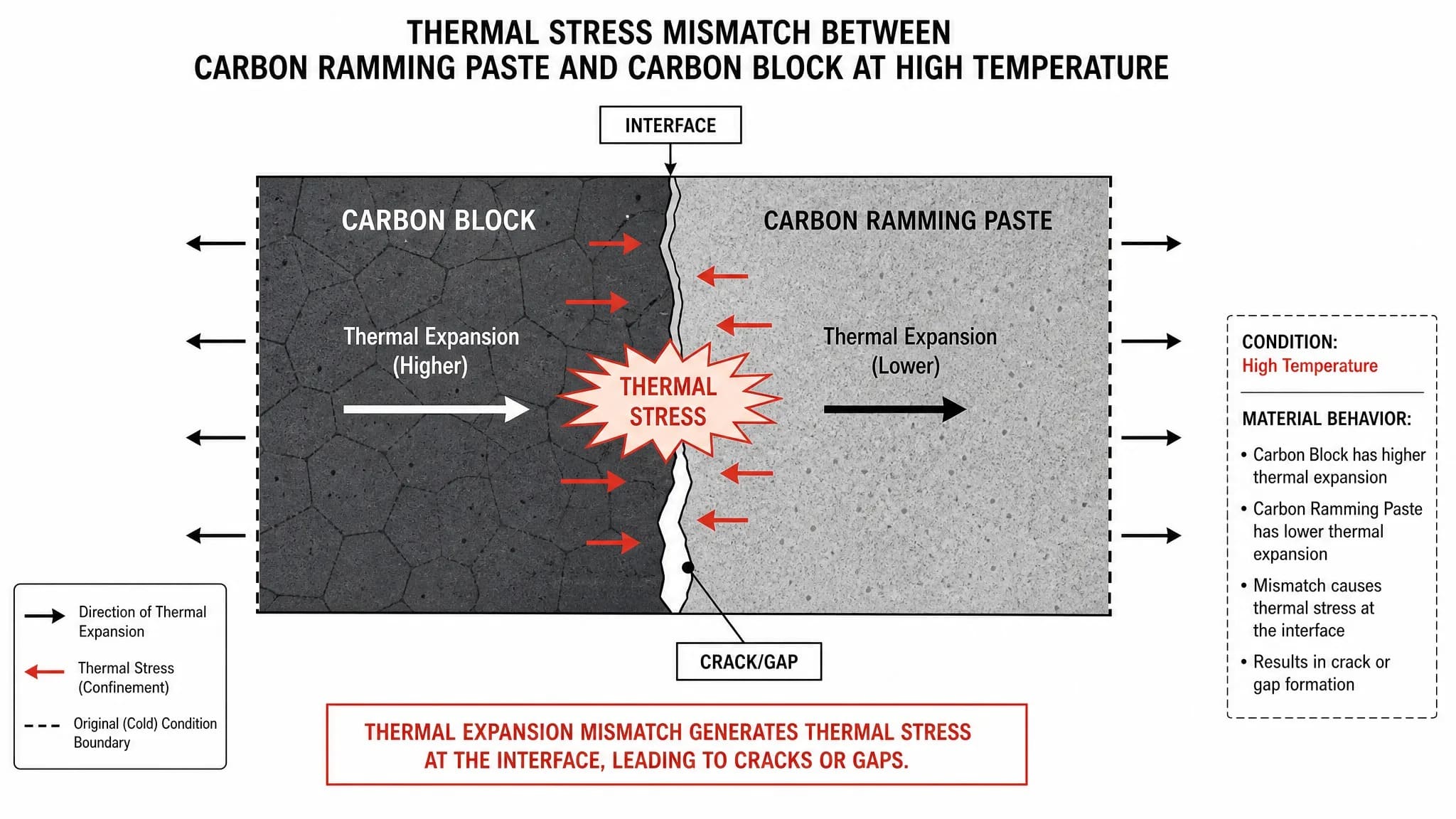
A mismatch between carbon ramming paste and carbon blocks creates two primary risks: uncontrolled thermal gradients and severe mechanical stress. Both can lead to cracks and ultimately, a shortened furnace campaign life, which is a far more expensive problem than the initial cost of materials.
Dive Deeper: The Hidden Costs of Incompatibility
In my years as a technical engineer, I've seen procurement discussions get sidetracked by isolated specs. A buyer might compare the cold crushing strength of a paste from one supplier to another without asking the most important question: how do its properties match the blocks we are using? This is where the real danger lies.
The Peril of Mismatched Thermal Conductivity
Thermal conductivity determines how quickly heat moves through a material. Your carbon blocks are chosen for a specific conductivity profile to manage the intense heat of the furnace. If the ramming paste has a significantly different conductivity, problems arise.
- If the paste's conductivity is too low: It acts as an insulator, creating "hot spots" on the block faces. These localized high-temperature zones accelerate wear and chemical erosion on the blocks, leading to uneven degradation of the lining.
- If the paste's conductivity is too high: It can draw heat away from the blocks too quickly, potentially altering the process conditions or, in extreme cases, creating cold spots that can affect the furnace's efficiency.
In either scenario, the result is an unpredictable and uneven wear pattern, making maintenance planning difficult and increasing the risk of an unexpected breach.
The Inevitable Cracks from Mismatched Thermal Expansion
This is perhaps the most critical factor. All materials expand when heated and contract when cooled. Carbon ramming paste and carbon blocks are engineered to expand at a controlled, predictable rate. If their coefficients of thermal expansion (CTE) don't align, they fight against each other.
Imagine a paste that expands by 1.5% while the blocks expand by only 1.0% at operating temperature. This 0.5% difference creates immense internal pressure within the joints. Over many thermal cycles, this stress will inevitably lead to:
- Cracking at the interface between the paste and the block.
- Spalling of the block corners.
- Joint opening during cooling, creating pathways for liquid metal to penetrate deep into the lining during the next heat-up.
From our experience with high-capacity blast furnaces, a penetration event caused by a cracked joint is one of the most severe failure modes3, as it can quickly destroy the entire hearth structure.
How Do You Evaluate Them as a System?
You’re trying to avoid a costly mismatch, but spec sheets show isolated data points. How do you move from comparing individual numbers to verifying system-level performance? The key is to shift your questioning from "what is the spec" to "how does it perform with the block."
The best way to assess system compatibility is to demand performance data that shows how the carbon ramming paste and carbon blocks behave together. A reliable supplier should be able to provide this, as they design the paste specifically to complement their blocks.
Dive Deeper: From Spec Sheets to System-Level Questions
During procurement, your goal is to confirm that the supplier has engineered these two products as a pair. The paste is not an off-the-shelf commodity; it's a prescription for the specific blocks you are buying.
The Sintering Process: Where Paste Becomes Lining
When you install the lining, the ramming paste is a pliable, putty-like material. During the initial, controlled heat-up of the furnace, a critical transformation occurs: sintering. The binders in the paste burn off, and the carbon aggregates fuse together4 and with the adjacent blocks. This process turns the paste-filled joints into a solid, monolithic carbon structure. A successful sinter requires that the paste's chemical and physical properties are perfectly tuned to the blocks and the furnace's heat-up schedule.
A mismatch can lead to a poor sinter, resulting in a porous, weak joint that fails to provide a proper seal—a defect that is impossible to see until it's too late.
Questions to Ask Your Supplier
Instead of just requesting a Technical Data Sheet (TDS), use these questions to probe for system compatibility. As a supplier, we welcome these questions at Yaxin Carbon because they show the buyer is focused on what truly matters: long-term performance.
- "Can you show me the thermal expansion curves for both the ramming paste and the carbon blocks on the same graph, up to our target operating temperature?" This is the most direct way to verify CTE compatibility. The curves should track each other closely5.
- "What is the recommended heat-up schedule to ensure proper sintering of this paste with these blocks?" This confirms they have a tested procedure for the combined system.
- "Do you have reference cases where this specific paste-and-block combination has been used in a furnace of similar size and application to ours?" This provides real-world proof of performance.
- "How does the thermal conductivity of the sintered paste compare to the conductivity of the block at operating temperature?" The values should be similar to ensure uniform heat transfer.
Pushing for these answers moves the conversation from a commodity purchase to a technical partnership, which is essential for a critical asset like a furnace lining.
Frequently Asked Questions
Can I use a ramming paste from one supplier with carbon blocks from another?
While technically possible, it is extremely risky6. This would require you, the buyer, to perform the extensive validation and testing to ensure compatibility. It's far safer to source the carbon ramming paste and carbon blocks as a complete system from a single, qualified manufacturer who guarantees their performance together.
What happens to the ramming paste during the initial heat-up?
During the initial heat-up, the paste undergoes sintering. The organic binders in the paste decompose, and the carbon particles fuse together, forming a hard, dense, and solid carbon joint. This process permanently bonds the paste to the blocks, creating the monolithic lining.
Is a more expensive ramming paste always a better choice?
Not necessarily. The "best" paste is the one that is most compatible with your carbon blocks and application. An expensive, high-performance paste that is mismatched with your blocks will perform worse than a standard, correctly matched paste. Compatibility is always more important than price alone.
Conclusion
The biggest takeaway I hope you remember is this: treat your furnace lining as a single, integrated system. The synergy between carbon ramming paste and carbon blocks is not a minor detail—it is the foundation of a long and reliable furnace campaign. Focusing only on the quality of the blocks while treating the paste as a simple filler is a recipe for failure. A mismatch in thermal properties can introduce stresses and hot spots that will inevitably shorten the life of your entire lining. By asking system-level questions and demanding proof of compatibility, you can mitigate these risks and make a procurement decision that ensures safety, reliability, and long-term value.
At Yaxin Carbon, we specialize in developing and manufacturing complete, high-performance furnace lining solutions. If you are evaluating options for your next project and want to ensure perfect system compatibility, contact our technical team to discuss your specific requirements.
"Sintering", https://en.wikipedia.org/wiki/Sintering. A source could describe the sintering process in carbonaceous ramming mixes, where binders are pyrolyzed and carbon aggregates fuse, creating a dense, strong joint that bonds to adjacent refractory blocks. Evidence role: definition; source type: paper. Supports: The claim that ramming paste sinters to form a solid, monolithic joint with carbon blocks.. ↩
"Wear mechanism for blast furnace hearth refractory lining", https://www.academia.edu/5459565/Wear_mechanism_for_blast_furnace_hearth_refractory_lining. Research on blast furnace hearth wear mechanisms shows that joints are primary weak points for liquid iron penetration; a properly sintered, monolithic lining creates a continuous barrier that resists this infiltration. Evidence role: mechanism; source type: research. Supports: The claim that a seamless, monolithic furnace lining is crucial for preventing the infiltration and penetration of liquid metal.. ↩
"Blast furnace", https://en.wikipedia.org/wiki/Blast_furnace. Post-mortem analyses of failed blast furnace hearths, often conducted by research institutions or industry associations, frequently identify metal penetration through joints as the initiating event for catastrophic failures, including hearth breakouts. Evidence role: case_reference; source type: institution. Supports: The claim that metal penetration through failed joints is a critical and severe failure mode for furnace linings.. ↩
"Sintering", https://en.wikipedia.org/wiki/Sintering. Research on the pyrolysis and sintering of carbonaceous ramming mixes explains that during initial heat-up, organic binders like tar or resin decompose to form a carbon char, which then bonds the primary carbon aggregates (e.g., coke and graphite) into a solid, sintered mass. Evidence role: mechanism; source type: paper. Supports: The claim that binders in a carbon ramming paste decompose during heating, allowing carbon aggregates to fuse.. ↩
"Evaluation of Refractories for Aluminum Recycling Furnaces", https://stacks.cdc.gov/view/cdc/10473/cdc_10473_DS1.pdf. Technical guidelines from refractory industry associations and standards organizations (like ASTM) recommend comparing the thermal expansion curves of components intended for use together, stating that closely matching curves up to the operating temperature are indicative of good thermomechanical compatibility. Evidence role: expert_consensus; source type: institution. Supports: The claim that comparing the thermal expansion curves of different refractory components is a standard method for assessing their thermomechanical compatibility.. ↩
"Refractory Materials and Their Procurement", https://www.academia.edu/4568614/Refractory_Materials_and_Their_Procurement. Industry best practices and technical literature from refractory engineering experts often advise sourcing furnace linings as a complete system from a single manufacturer to ensure that all components have been designed and tested for compatibility, thereby assigning clear responsibility for system performance. Evidence role: expert_consensus; source type: other. Supports: The claim that sourcing critical, interacting refractory components like blocks and mortars from different suppliers is considered a high-risk practice.. Scope note: This source would support the general principle of using a single-source system but may not use the exact term 'extremely risky'. ↩