

Refractory Solutions · Carbon Block Technology
Carbon Block:
The Complete Guide
to Every Grade
From semi-graphitic roasted carbon bricks to ultra-microporous and high thermal conductivity grades -- explore the full spectrum of carbon block classifications, performance benchmarks, and application engineering for blast furnaces, submerged arc furnaces, and electrolytic cells.
This authoritative pillar page covers material science, grade selection criteria, installation standards, and procurement guidance to help engineers, metallurgists, and purchasing managers make informed decisions.
Foundation Knowledge
What Is Carbon Block?
Carbon block (also called carbon brick or carbonaceous refractory) are made from high-quality ultra-high temperature electrically calcined anthracite as the main raw material, with the addition of high thermal conductivity artificial graphite, industrial silicon and other additives, and modified asphalt as a binder. They are produced through mixing, molding, high-temperature firing and fine processing.. The result is a dense, chemically inert, thermally stable lining material capable of withstanding the most severe metallurgical environments.
Unlike oxide-based refractories (such as fireclay or alumina bricks), carbon blocks do not react with molten iron, slag, or alkali compounds under reducing atmospheres. This makes them the material of choice for blast furnace hearths, submerged arc furnace sidewalls, hearths, tapholes, and other aggressive high-temperature applications.
The performance characteristics of carbon block -- thermal conductivity, porosity, compressive strength, electrical resistivity, and alkali resistance -- vary significantly depending on raw material selection, particle size distribution, binder content, pressing pressure, and firing temperature. These variables define the grade classification system used throughout the global refractory industry.
High Thermal
Conductivity
Chemical
Inertness
Low Porosity
Structure
Alkali
Resistance
Classification System
Carbon Block Grade Classifications
The modern carbon block industry classifies products into distinct grades based on microstructure, graphitization degree, pore size distribution, and thermal performance. Each grade is engineered for specific operational conditions -- there is no single "best" carbon block; the optimal choice depends on your furnace design, campaign life targets, and budget parameters.
Below is a comprehensive breakdown of all major carbon block grades, their defining characteristics, typical specifications, and recommended applications.
Grade Classification
Semi-Graphitic Roasted Carbon Brick
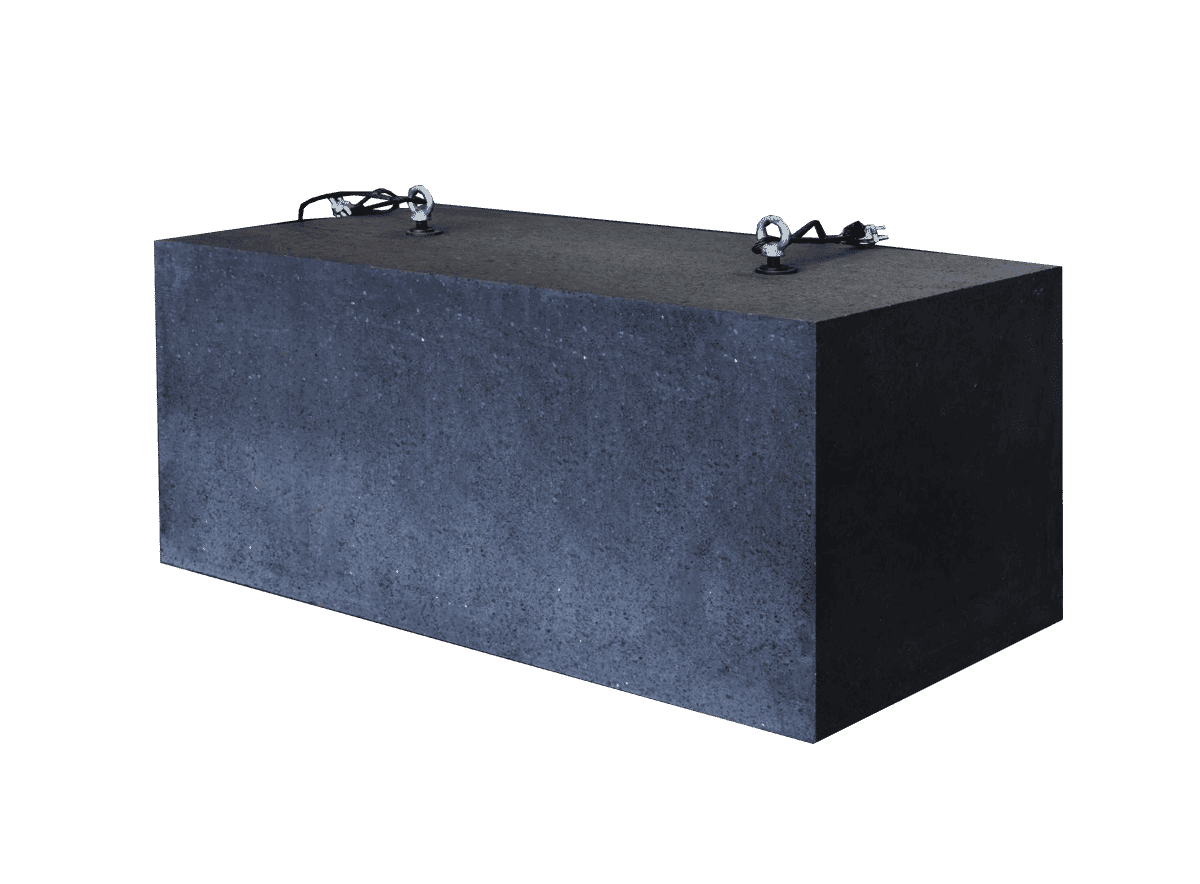
Semi-graphitic carbon block represents the foundational tier of the carbon block family. It is produced by blending anthracite aggregate with artificial graphite and coal tar pitch binder, then firing at 1,100-1,350 °C in a controlled reducing atmosphere -- a process known as baking (as distinct from full graphitization above 2,500 °C).
Compared with standard anthracite based carbon blocks, semi graphite carbon block have better thermal conductivity and excellent resistance to alkali metal erosion.
This grade is precisely engineered for the hearth bottom of small and medium blast furnaces, where exceptional resistance to thermal stress and molten iron erosion is critical.
| Property | Typical Value | Unit |
|---|---|---|
| Bulk Density | ≥ 1.58 | g/cm³ |
| Apparent Porosity | ≤ 20 | % |
| Compressive Strength | ≥ 32 | MPa |
| Thermal Conductivity (600 °C) | ≥13 | W/(m·K) |
| Ash Content | ≤ 7 | % |
| Alkali Resistance | U | Garde |
Grade Classification
Graphite Carbon Block
Graphite Carbon Block is manufactured using low-sulfur, low-ash petroleum coke and needle coke as primary raw materials, with coal tar pitch serving as the binder. The production process involves a rigorous multi-stage sequence -- kneading, molding, high-temperature roasting, high-pressure impregnation, secondary roasting, high-temperature graphitization, and precision machining -- ensuring exceptional structural integrity and material consistency.
Graphite Carbon Block exhibits outstanding thermal conductivity, making it highly effective at reducing furnace bottom temperatures and mitigating the rate of hearth erosion.
Graphite carbon blocks are the preferred choice for the first layer of the blast furnace bottom and the belly area, where thermal management and long-term durability are critical performance requirements.
Key Advantage
While graphite carbon blocks have a higher initial cost per ton, the true value lies in the campaign life. By utilizing microporous technology, they effectively build a protective slag crust, resist hot metal penetration, and prevent alkali embrittlement. This safely extends the furnace hearth lifespan to 10–15+ years. Ultimately, avoiding just one major overhaul saves millions in downtime and relining costs—delivering the maximum ROI for your plant.
| Property | Typical Value | Unit |
|---|---|---|
| Bulk Density | ≥ 1.65 | g/cm³ |
| Apparent Porosity | ≤ 20 | % |
| Compressive Strength | ≥ 28 | MPa |
| Thermal Conductivity (300 °C) | ≥ 60 | W/(m·K) |
| Fe | ≤ 0.04 | % |
Grade Classification
Microporous Carbon Block
Microporous carbon block represents a significant technological advancement over conventional carbon bricks. The defining characteristic is its engineered pore structure: the majority of pores are smaller than 1 μm in diameter, with a mean pore diameter typically in the range of 0.3-0.5 μm.
This microporous structure is achieved through the careful selection of fine-grained raw materials, optimized particle packing, the use of specialized additives, and controlled firing conditions. The result is a brick that physically blocks the penetration of molten iron, slag, and harmful alkali vapors into the refractory matrix—the primary causes of carbon brick degradation in blast furnace service.
standard carbon blocks delay the inevitable, but microporous carbon blocks actively defend the furnace. By manipulating the pore size down to the sub-micron level, we use the iron's own surface tension against it—creating a block that is impenetrable to molten iron, immune to alkali vapor cracking, and perpetually highly conductive to maintain a protective slag crust. This isn't just an upgrade in materials; it's an engineering necessity for any blast furnace aiming for a 15-year-plus campaign life.

Pore Size
< 1 μm
Mean pore diameter
Permeability
Very Low
Blocks iron/slag penetration
Application
BF Hearth
Primary use case
| Property | Typical Value | Unit |
|---|---|---|
| Bulk Density | ≥ 1.65 | g/cm³ |
| Apparent Porosity | ≤ 16 | % |
| Mean Pore Diameter | 0.3-0.5 | μm |
| Compressive Strength | ≥ 38 | MPa |
| Thermal Conductivity (600 °C) | 14-16.8 | W/(m·K) |
| Alkali Resistance | Excellent | -- |
Grade Classification · Premium Tier
Ultra-Microporous Carbon Block
Ultra-microporous carbon block is the premium evolution of the microporous concept, engineered to address the most demanding blast furnace hearth conditions encountered in large-volume, high-intensity iron-making operations. The pore diameter is reduced to below 0.1 μm -- a full order of magnitude finer than standard microporous grades.
Achieving this ultra-fine pore structure requires an advanced raw material matrix—incorporating high-thermal-conductivity artificial graphite and industrial silicon additives—combined with modified asphalt as the binder, heavy vibro-compaction technology, and precise thermal treatment protocols. During firing, the industrial silicon reacts to form pore-plugging ceramic phases. The resulting brick exhibits near-zero iron and slag penetration under the most aggressive operating conditions, making it the material of choice for the hearth bottom, lower sidewall, and highly stressed taphole areas of large blast furnaces (volume > 3,000 m³).
Ultra-microporous carbon blocks are further defined by their superior resistance to zinc and alkali vapor attacks -- the leading causes of carbon embrittlement. By combining ultra-fine porosity with exceptionally low permeability, these bricks create a virtually impenetrable physical barrier against reactive gases, ensuring maximum hearth stability.
Microporous (Standard)
Ultra-Microporous (Premium)
| Property | Typical Value | Unit |
|---|---|---|
| Bulk Density | ≥ 1.70 | g/cm³ |
| Apparent Porosity | ≤ 14 | % |
| Mean Pore Diameter | < 0.1 | μm |
| Compressive Strength | ≥ 36 | MPa |
| Thermal Conductivity (600 °C) | 20-24 | W/(m·K) |
| Iron Erosion | ≤ 28 | % |
Grade Classification · High Performance
High Thermal Conductivity Carbon Block
High thermal conductivity carbon block is purpose-engineered to maximize the rate of heat transfer through the furnace lining—achieving thermal conductivity values of 25-40 W/(m·K) or higher at operating temperatures. This is accomplished by utilizing highly conductive artificial graphite as the primary raw material, combined with a coal tar pitch binder. The mixture undergoes rigorous kneading, high-pressure molding, and high-temperature baking to create a dense, structurally uniform matrix with superior heat transfer capabilities.
The fundamental design principle is the "cooling concept" (often referred to as freeze-lining): by rapidly extracting heat from the hot face, the brick creates and maintains a frozen skull of solidified iron or slag that acts as a self-protecting layer. This approach has proven highly effective in extending blast furnace campaign life beyond 20 years in some installations.
Given their specific properties, high thermal conductivity carbon bricks are primarily specified for the blast furnace hearth bottom (especially the lower courses) where rapid downward heat dissipation is required. They are also highly effective for submerged arc furnace sidewalls, where skull formation is critical to protection against high-temperature corrosion.

| Property | Typical Value | Unit |
|---|---|---|
| Bulk Density | ≥ 1.60 | g/cm³ |
| Apparent Porosity | ≤ 18 | % |
| Thermal Conductivity (600 °C) | ≥25 | W/(m·K) |
| Compressive Strength | ≥ 30 | MPa |
| Iron Erosion | ≤ 32 | % |
| Thermal Shock Resistance | Excellent | -- |
Grade Classification · Specialty
Other Specialty Carbon Block Grades
Beyond the five primary grades above, the carbon block product family includes several specialty grades engineered for specific industrial applications. Each addresses a unique combination of operational challenges.
Anthracite-Based Standard Carbon Brick
The baseline grade manufactured from electrically calcined anthracite (ECA) and coal tar pitch binder. A highly cost-effective solution for smaller blast furnaces, submerged arc furnace hearths, and non-critical refractory applications. Offers adequate chemical stability and thermal conductivity for moderate operating conditions where extreme wear is not the primary concern.
Learn MoreGraphitized Carbon Block (Full Graphitization)
Produced through extreme heat treatment above 2,500 °C, achieving near-complete graphitization of the carbon matrix. It delivers the highest thermal conductivity (40-80+ W/(m·K)), lowest electrical resistivity, and exceptional thermal shock resistance of any carbon block grade. Primarily specified for electrolytic cell cathodes in aluminum smelting and specialized metallurgical applications.
Learn MoreSiC-Composite Carbon Brick
Silicon carbide (SiC) is strategically incorporated into the carbon matrix to significantly enhance abrasion resistance, thermal conductivity, and resistance to alkali attack. This composite grade bridges the gap between pure carbon and SiC refractories, offering a unique combination of high mechanical strength and chemical stability. It is highly suitable for high-wear zones in the blast furnace hearth, lower sidewalls, and taphole areas.
Learn MoreImpregnated Carbon Brick
Manufactured by subjecting standard or microporous carbon bricks to vacuum pitch impregnation after initial firing, followed by a rigorous second baking cycle. This process fills residual open porosity with additional carbon, reducing permeability by 30-50%. It delivers vastly improved resistance to iron and slag penetration, offering a high-performance middle-ground without the premium cost of ultra-microporous manufacturing.
Learn MoreSide-by-Side Analysis
Grade Comparison Table
Use this reference table to compare key performance metrics across all major carbon block grades at a glance. Values are indicative; contact our technical team for grade-specific certified data sheets.
| Grade | Bulk Density (g/cm³) |
Porosity (%) |
Pore Size (μm) |
Thermal Cond. [W/(m·K)] |
Comp. Strength (MPa) |
Primary Use |
|---|---|---|---|---|---|---|
| Semi-Graphite Block | ≥ 1.90 | ≤ 20 | 1-5 | 6-12 | ≥32 | BF Hearth (Medium) |
| Graphite Block | ≥ 1.60 | ≤ 25 | 1-3 | 60-90 | ≥ 25 | BF Hearth / SAF |
| Microporous Carbon Block | ≥ 1.63 | ≤ 16 | 0.3-0.5 | 9-16.8 | ≥ 38 | BF Hearth (Standard) |
| Ultra-Microporous Carbon Brick | ≥ 1.70 | ≤ 15 | < 0.1 | 16-24 | ≥ 36 | Large BF Hearth |
| High Thermal Conductivity | ≥ 1.60 | ≤ 18 | -- | 25-32 | ≥ 30 | BF Bottom / SAF |
Industry Applications
Where Carbon Block Performs
Carbon block refractories serve as the critical protective lining in some of the most thermally and chemically aggressive industrial environments on earth. Here is how each major industry sector relies on our advanced carbon block technology.

Blast Furnace Ironmaking
The hearth and bottom of a blast furnace represent the most demanding refractory environment. Carbon block grades--particularly microporous, ultra-microporous, and high thermal conductivity types--form the primary lining system protecting the furnace shell from molten iron and slag at 1,450-1,550 °C.
- Hearth bottom: High TC / Ultra-microporous
- Hearth sidewall: Ultra-microporous / Microporous
- Taphole zone: SiC-composite / High-strength microporous

Submerged Arc Furnace (SAF)
SAFs for ferroalloy, silicon metal, and calcium carbide production operate with highly corrosive slag systems and intense electrical currents. Carbon block linings provide the optimal combination of thermal performance, electrical properties, and exceptional chemical resistance to withstand these conditions over multi-year campaigns.
- Hearth bottom: Standard Anthracite / Semi-graphitic blocks
- Lower sidewall: Semi-graphitic / High TC blocks
- Taphole & Crucible: SiC-composite carbon
Decision Framework
How to Select the Right Grade
Selecting the optimal carbon refractory is a multi-variable engineering decision. The following framework covers the primary selection criteria used by metallurgical engineers to match the right grade to specific furnace conditions.
Furnace Volume & Production Intensity
Larger blast furnaces (>2,000 m³) with high production rates generate extreme heat and demand longer campaigns—justifying the investment in Ultra-microporous or High-TC (Thermal Conductivity) grades. Smaller furnaces or standard SAFs (Submerged Arc Furnaces) often achieve excellent performance with Microporous or Semi-graphitized blocks.
Target Campaign Life
If the target campaign life exceeds 15 years, investing in Ultra-microporous grades is essential to minimize relining costs and production downtime. For standard campaigns (8–10 years) or stable SAF operations, Microporous and Semi-graphitized grades typically deliver the best cost-performance ratio.
Cooling System Design
Furnaces equipped with intensive stave or copper cooling plates benefit most from High-TC or Graphitized grades. High thermal conductivity rapidly transfers heat to the cooling system, forming a stable "frozen skull" (protective slag layer) that protects the refractory from premature wear.
Alkali & Zinc Load
High alkali loads (K₂O + Na₂O > 5 kg/tHM) and zinc circulation are highly destructive to carbon. Our Ultra-microporous blocks, with their extremely fine pore structure (<1 micron), physically seal off these reactive vapors, making them the ultimate defense against chemical attack and embrittlement.
Budget & Total Cost of Ownership
While premium grades carry a higher unit price, the Total Cost of Ownership (TCO)—factoring in campaign life extension, reduced relining frequency, and production continuity—often favors the higher-specification product. Our technical team can provide a zone-optimized design to balance your budget.
Furnace Zone & Position
Different zones experience different wear mechanisms. The severe erosion zone (e.g., lower hearth sidewall) demands Ultra-microporous or High-TC blocks, while lower-stress areas (e.g., hearth center bottom or SAF linings) are well-served by Microporous or Semi-graphitized options. Zone-optimization maximizes ROI.
Not Sure Which Grade to Specify?
Our refractory engineers provide free technical consultation for grade selection, lining design, and performance optimization.
Technical Guidance
Installation &
Best Practices
The performance of even the highest-quality carbon blocks (such as Ultra-microporous or High-TC grades) can be compromised by improper installation. The following guidelines represent industry best practices for carbon lining systems.
Pre-assembly & Machining Precision: To guarantee a flawless fit, our premium carbon blocks are precision-machined and pre-assembled at our facility. On-site contractors must strictly follow the provided installation diagrams and numbering sequences to maintain the designed integrity of the hearth.
Joint Thickness Control: Because molten iron can penetrate weak points, joint thickness must be relentlessly minimized. For our high-precision Micro/Ultra-microporous grades, carbon cement joints should typically be controlled between 1.0 mm and 1.5 mm. Excessively thick joints negate the benefits of high-quality blocks.
Ramming Paste Application: The gap between the carbon blocks and the furnace shell/cooling system must be packed with high-quality carbon ramming paste. Proper pneumatic tamping is critical to achieve maximum density, ensuring seamless heat transfer from our High-TC blocks to the cooling system.
Drying & Bakeout Protocol: A carefully controlled bakeout schedule is essential to cure the carbon cement and ramming paste binders without inducing thermal shock. Controlled temperature elevation prevents volatile gas entrapment, ensuring the carbon lining reaches its maximum mechanical strength before blow-in.

Installation Checklist
- Furnace shell cleaned and irregularities leveled
- Carbon mortar grade matched to brick specification
- Carbon cement applied evenly for ≤ 1.5 mm joint thickness
- Ramming paste pneumatically tamped to required density
- Cooling system pressure-tested prior to installation
- Staged bakeout heating curve approved by refractory engineer
Frequently Asked Questions
Carbon Block FAQ
Answers to the most common questions from engineers, metallurgists, and procurement managers about carbon block selection, performance, and procurement.
What is the difference between microporous and ultra-microporous carbon brick?
How do High Thermal Conductivity (High-TC) blocks extend furnace campaign life?
Can different carbon block grades be used in the same furnace?
What certifications and quality standards should carbon block meet?
What lead times should I expect for carbon block orders?
Do you offer custom dimensions and shapes for carbon block?
Browse Our Full Product Range
Ready to Specify Carbon Block?
Explore detailed product pages with full technical specifications, dimensional data, and application guidance for every grade.
Get in Touch
Request a Quote or
Engineering Consultation
Whether you require a rapid quotation for specific block grades, or comprehensive engineering support for a complex furnace relining project—our team of refractory experts is ready to assist.
For the most accurate technical assessment, please share your furnace parameters, current wear profiles, or target campaign life.
Phone / WhatsApp
+86 186 0579 9829
Response Time
Within 24 hours on business days